Sure, but as failure of any given component becomes less likely, the advantages of making it replaceable cease to outweigh the disadvantages. An M1 MacBook Air with replaceable RAM and SSD would not have the same performance, battery life or form factor. 99% of Apple's customers care way more about those things than they care about upgradeability.
>But it is already recognized that firms like Apple that indulge in this already know that the profit from such unrepairable devices offset the additional expense on the R&D required to create it.
I'm baffled by this claim. If all Apple wanted was to make their laptops unupgradeable then they could just solder on generic CPU, RAM and SSD components – no R&D needed.
I try not to use the term 'conspiracy theory' lightly, but the claim that Apple's transition to the M1 architecture is motivated primarily by 'planned obsolescence' really is a conspiracy theory.
Discrete replaceable components use up more space, which leaves less space for battery. On top of that, Apple are most likely getting power consumption and performance benefits from integrating the SSD controller and reducing the length of the traces to the RAM chips by an order of magnitude (https://news.ycombinator.com/item?id=25258797). Take a look at the logic board for an M1 MacBook Air: https://photos5.appleinsider.com/gallery/38927-74332-MBA-Tea... There's just no room for RAM sticks and and M2 slot. You could make a different laptop with those features, but it's a laptop that from the point of view of most consumers would be worse.
>but it's a laptop that from the point of view of most consumers would be worse
"Worse", but the insignificantly "better" one is landfill in a few years time when the battery/storage/keyboard/anything has a fault, or even just when it needs more RAM or storage.
Do you have any stats on this? I'd be surprised if Apple laptops ended up in landfill quicker than their competitors' on average, given the huge second hand market. You also have to bear in mind that the vast majority of 'broken' laptops just get thrown away or put in a cupboard, regardless of whether it would be theoretically possible to repair them.


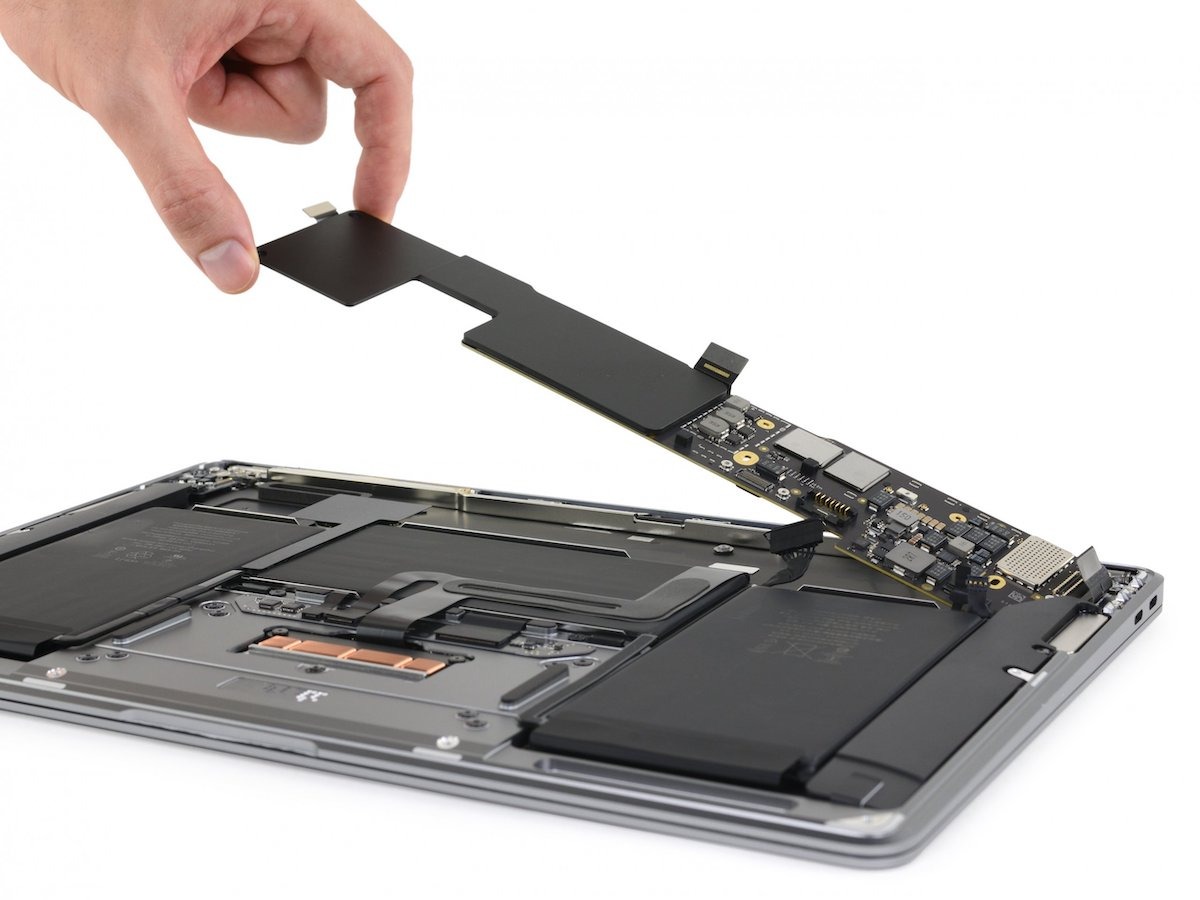
Sure, but as failure of any given component becomes less likely, the advantages of making it replaceable cease to outweigh the disadvantages. An M1 MacBook Air with replaceable RAM and SSD would not have the same performance, battery life or form factor. 99% of Apple's customers care way more about those things than they care about upgradeability.
>But it is already recognized that firms like Apple that indulge in this already know that the profit from such unrepairable devices offset the additional expense on the R&D required to create it.
I'm baffled by this claim. If all Apple wanted was to make their laptops unupgradeable then they could just solder on generic CPU, RAM and SSD components – no R&D needed.
I try not to use the term 'conspiracy theory' lightly, but the claim that Apple's transition to the M1 architecture is motivated primarily by 'planned obsolescence' really is a conspiracy theory.