Seems like policy written by petrol car drivers and not well thought out. In the future electric vehicle world 95% of charging will be done at home, or in some facility near your rental building. Most EV drivers have no need to visit charging stations unless they're going on an extended road trip, and then we need a particular _kind_ of DC fast charging station.
I mean... I have an EV and I could count on two hands the number of times I've even used a public charging station. I charge at home, commute to work, charge up some there sometimes, and then return home and plug in. I have a "gas butler" [1] at home. Stopping at a gas station is a thing of the past for me, unless I need to pick up windshield wiper fluid.
Most EV drivers have no need to visit charging stations [...]
You do realise that we're talking about Germany here, don't you? You cannot apply US standards to a foreign country with 7x the population density and only a ~50% home ownership rate...
The fact of the matter is, that half of German households cannot charge their vehicles at home, because they live in a rented apartment.
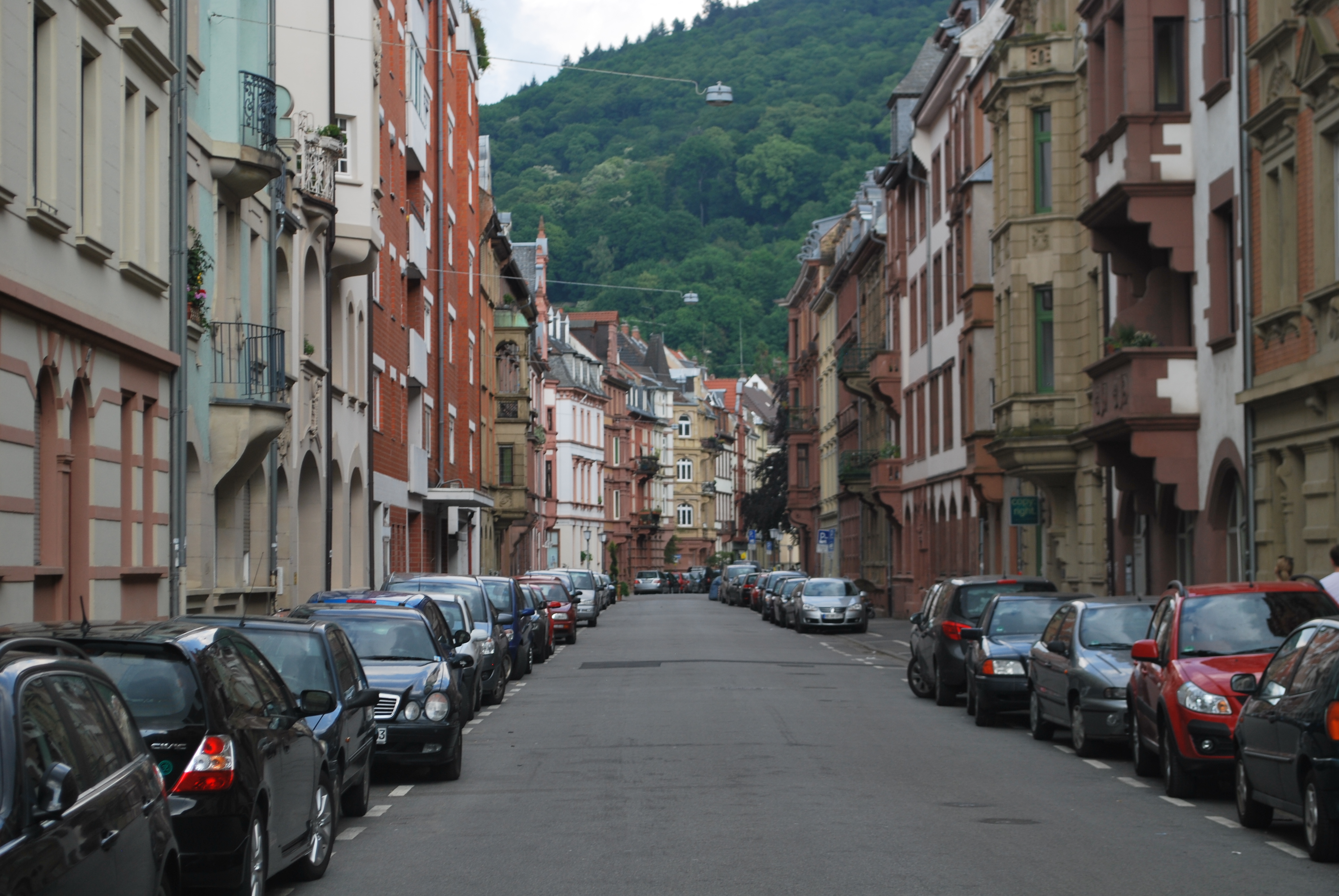
In cities in particular (you know, the places where EVs make the most sense), many people don't have a garage - often not even a dedicated parking spot.
This is an actual problem that prevents many people from owning an EV in Germany.
Another problem is that even if you are lucky to be able to rent a garage for a few hundred bucks per month, you are not able to get your car charged inside. A lot of building regulations will prevent that, including Erschliessungsgebühren, Elektroverträglichkeitsmessungen, the required VDE Sicherheitsprüfungen and the fact that each garage lot would require a legal address in order for paying Energiesteuer there, as the control of that is done by external organizations like the ISTA or similar entities.
And yes, overall for private people it’s totally impossible to think of everything in this regard, even if you are lucky enough to have an owned home.
Interesting. Do you have details to share, because I'd vaguely planned to equip my garage with electrical charging capability? I can assure you though that nobody is paying several hundred bucks per month for a garage or parking lot except maybe in the very city center of the four big cities in Germany, like next to the iconic main attraction of that city. It seems the public sector wants to grab the money for EV charging, with public parking lots being dedicated to it, while there's no plan for private proprietors to install their own charging.
> Do you have details to share, because I'd vaguely planned to equip my garage with electrical charging capability?
Where do you live? The regulations vary a lot from state to state and even city to city, as the local Bauamt or Baubehoerde usually has the last say when it comes to approval/denial of installations like this.
In the BW area there's something available like the Netze-BW initiative that does most of the mentioned regulations/paperwork for you [1].
I'm not sure whether or not RWE or EON (the energy suppliers for more Northern states of Germany) have a similar initiative, but it seems that you can get the "Wallboxes" from them as well [2]. In the larger cities like Karlsruhe, I've seen a lot of the charger stations of Innogy [3] that seem to offer installation services for parking lots and private garages as well as for businesses.
> I can assure you though that nobody is paying several hundred bucks per month for a garage or parking lot
Prices kinda exploded around the Baden-Wuerttemberg area over the last years in the "Regionalmetropolen" aka where most industries or businesses are located. Can only speak for those, though I'd imagine that a lot of the mid-larger cities have even more problems with higher densities of people/m^2.
I'm guessing that while a proper type 2 charger might be impossible to install, but if you have a regular electrical socket you can just use a 3-pin "granny" charger. Sure it's slow but overnight it should be enough, and you don't have to ask anyone for permission for these.
Thanks very much for the info! I'm in HH, but have been to Freiburg frequently some years ago, which is certainly a lovely (and expensive) place, but even there I'd be surprised to hear prices in the range you mentioned. Maybe it has changed recently.
You are totally correct, yet OP's point is still reasonable - this was written from the perspective of a petrol-car driver; moreover, it's a missed opportunity to think differently. Petrol stations require big tanks underground to store the petrol; we don't have pipelines through the city carrying petrol. On the other hand, we do have a massive network of wires carrying electricity. EV charging can so easily be distributed, that there is simply no need for 'petrol stations.' Put charging spots directly on the street and other parking places, with an app/API to show availability. Monitor demand, and add more in hotspots.
That would require significant more infrastructure in public spaces. Requiring petrol stations is a good first step to break the barrier that combines private/public work.
(I'm assuming petrol stations are private enterprises in Germany on this point)
Yes, because an electric parking meter uses only a few watts of electricity and may not even be connected to the grid (the most common ones I've seen just have a tiny solar panel). A electric vehicle charger may use 200 kW and require its own dedicated transformer. A fast charger is a fairly substantial cabinet. Now you're jackhammering the sidewalk to bring an underground electrical service to that spot.
Can you apply your thinking to petrol stations. We build floating city's to extract oil thousands of meters down. Is running some cables harder then that?
An off shore oil well will basically extract black gold, paying for themselves in no time(at least when the oil barrel price was high). Electrical charging station on the sidewalk not so much.
The current needed to charge an EV is far higher than what a parking meter was wired for.
Privately run charging stations on public sidewalks are few and pricey and most of the time sitting empty.
So it's clear that if you want a mass switch to EVs the government will need to subsidize the infrastructure to make EV charging affordable. However, digging up the sidewalks of a whole city with public funds to cable it for EV charging is the last thing taxpayers want to hear even in green Austria since it's seen as a something that will only benefit the top % that can afford EVs and they already have charging stations at their houses.
I imagine the wiring to the meters is designed to carry the current necessary to run an electric parking meter and wouldn't hold up to the current required to charge an EV.
We already have similar on-street charging stations like that in Berlin, just not enough. I suspect the reason it's not all street-parking is the strain on the electric infrastructure which would probably require a lot of rewiring.
What would be a good use of gas stations for electric cars is battery swapping. It is too early to make this mandatory but I think it might be time to start working on this idea. (It has been looked into before.)
Battery swapping was an idea that made sense when battery tech wasn't as good and ranges weren't as great, but its window has passed. You might be thinking of Better Place, which actually launched a battery-swap station. It made sense (some) sense at the time to spend 5 minutes on a battery swap that would otherwise take 6 hours to charge for 111 miles of range. But today, right now, you can spend 20 minutes to get 174 miles of range at a supercharger.
...which is also why it's a bit frustrating to see people saying "Oh, this is from the perspective of gas guzzlers!"...no it isn't. this is a huge win, we're not trying to replace all infrastructure overnight, but it lowers the inconvenience of a marginal EV greatly...174mi in 20 min is damn good, that's 4 of my loooong commutes
> But today, right now, you can spend 20 minutes to get 174 miles of range at a supercharger.
That's still 20 minutes longer than it should take. And probably around 15 minutes longer than it takes to fill up with gas (which will give you twice the range). Speeding that up makes sense.
(To be clear, I don't think it's reasonable to mandate swappable batteries, for instance; there's far too much innovation and potential innovation in battery technology for that. However, I think it's reasonable to experiment with that, and any other solution that will let it take less time to charge.)
While I would usually agree with your line of thinking, I'm not sure it applies here as well.
There is more money to be made in not providing the service and slowing down EV adoption, environment be damned. That makes it the perfect situation for the government to jump in and re-align those incentives.
Just charge an carbon tax. That should give people the right incentives.
(Including eg just drive your existing cars less. 50% reduction in driving existing cars is as good or better for the environment than eg 50% conversion to electric cars. But I don't expect the government to know what is better for the customer.)
This isn't just a matter of paying for a service because ICE cars will disappear in a few decades. Removing options before there are viable alternatives is bad policy. Good policy would make the migration from an old to a new technology as smooth as possible.
Maybe just swap cars. They can maintain a small inventory of fully charged EVs, just swap your depleted EV out and be on your way. Then your previous EV gets charged up for the next guy.
Half of German households does not need to own a car because of excellent public transportation systems, car-sharing and policies oriented to remove personal cars from the streets.
I think another option is charging stations at major stores and office spaces that have parking lots. That way you can charge while shopping or working. I see this become more common in the US.
> The fact of the matter is, that half of German households cannot charge their vehicles at home, because they live in a rented apartment.
Do apartments in Germany not have charging stations? And if not, is there a fundamental reason why they can't be remedied somehow in the near-ish future?
My apartment building in Berlin doesn't even have dedicated bathrooms. The shower is in the kitchen. They used to be workers dorms which were converted. They previously had communal facilities and they had to squeeze these in where ever they could when converting. There is on street parking. Really I think the next step isn't EVs but kicking cars out of the neighbourhood altogther. We don't need them. They are mostly used for ego not transport it seems.
Like most general statements about the US, this is only true in parts of it. Plenty of cities in the US, especially the older east coast one's, do not have apartment buildings with parking lots.
New buildings usually have underground parking, but I don’t think this policy has anything to do with the residents of the big cities. Car-sharing is more viable option there and it’s easy to provide chargers for car-sharing services on the streets.
If you don't have a parking space, you probably don't have an EV and whether gas stations have chargers or not is irrelevant.
If you do, it doesn't matter if you're renting or not, you have a similar ability to charge at home. What you probably can't do is install a dedicated fast charger unless you somehow plan to take it with you when you move, or work a deal with the landlord to share the cost.
I think the one thing that does change in Germany is more people live in apartments where you have less options for installing a charger than in the suburbs in your own garage in the US.
Parent comment said "no dedicated parking space" which is a different thing. When I lived in Toronto, I had a resident permit issued by the city to park on the street on same block as my building, but I was at the mercy of whatever space was available. Some days I'd get a spot right in front of my building, some days I had to walk around the corner. This is a pretty common parking scenario in dense, older areas - there is no dedicated parking lot and the space you are parking on is part of the public realm.
Not in Germany, but I do have a dedicated parking space, I could totally afford an electric car, an yet it would not be practical to get one. Here are my reasons:
- I need one car, not many (I'm lucky to get _one_ space, ain't gonna get several!).
- I can't charge it there, there's no infrastructure. Sure, I can ask city to add infrastructure but... good luck with that, it's going to take a while, there are a lot of problems to solve (besides actually installing power near my space, we need a meter to charge me, and it needs to be a "smart meter" that doesn't allow everybody to use power paid by me; it needs to be at least moderately vandalism-proof. And I need to find a way to leave my car plugged in for extended periods of time, unsupervised, without fearing that someone will steal stuff from it - e.g. the charging cable?)
- If all the above are solved - I still need to use that car for extended trips (vacations, visiting parents in a different city). Those would still mean that I need to charge "on the road". Due to the first point, it'd still be a challenge to go 100% electric even if I had the "charging at home" part covered.
Really, I think if we don't solve the "charging in gas stations" part, electric vehicle use is going to be inherently limited.
One thing I've wondered about is key less entry could solve a bunch of issues with cars. Like pay the local charging station to deal with charging. As in middle of the night a attendant gets in your car, drives it a couple of minutes to a charging station and plugs it in. Brings it back an hour or two later.
Like I said earlier, my father's family is German; there is a mix of residential situations and I wouldn't say the majority of them live in the scenario you are showing here with a densely packed street; and for the people who live like that, car ownership isn't strictly necessary.
Ideally we want people to not have to drive at all. Which is actually possible in most German cities. Last time I was visiting Mainz I was able to take trains and buses everywhere, including out into the countryside for a hike. This is a far better situation than anywhere in North America.
My Oma & Opa lived in suburban Mainz (Weisenhau) in an apartment building (with a parkade of some kind, don't recall the details as this was about 25 years ago) for decades before moving back downtown to a senior's residence. My aunt and uncle live in Mainz Laubenheim, in a single family home with a car parking pad in front for their vehicle. My other aunt lives in a building, she doesn't own or need to own a car really.
Chargers are only small poles, not that big.
And you do not need to pack the street full of chargers.
Just pust a few chargers that each charge two cars and reserve the the spots for electrical cars.
When electrical cars get numerous add an hourly fee to motivate owners to move their cars when full charged.
This is how it looks at my place in Copenhagen: two charging stations each serving two cars.
But I also think charging at petrol stations make sense.
When considering buying an electric car, at least if the family only have one car, it is a big issue if it can be used on long trips, even if you only do them a few times a year.
And if you are driving to Italy doing 90+ miles/h on the German highways then you will need to charge you vehicle several times. And you will not have time to get off the highway every time. But a 20 minute toilet and coffee break is acceptable.
I get it, but do you think queuing up at a petrol station is a viable solution to this or is it more likely to be political maneuvering to appease the station owners who are worried their business models will be obsolete soon?
> or is it more likely to be political maneuvering to appease the station owners who are worried their business models will be obsolete soon?
What would be the point of that? If station owners believe that charging stations will keep their businesses alive, then they'll put them in themselves, without needing a law telling them to do so.
I haven't looked much into it and I don't know that many people who own an electric car, to be honest.
What I could think of is that gas stations themselves might become somewhat more multi-use, that's already the case in some places in Germany. So people might to grab something to eat while charging up or do some shopping and so on. Scale them up a bit so that people have something useful to do while their car charges. People in Germany still like traditional stores and physical shopping a lot, I don't think it's just pandering to the owners.
The bulk of the charger would have to be embedded in the street or sidewalk with only the cable protruding. That might make for a pretty expensive installation, but it could be done.
"You do realise that we're talking about Germany here, don't you? You cannot apply US standards"
a) I'm not in the US. b) My extended family is all German. I'm quite familiar with the differences in Germany. Gas stations are still not the right distribution model.
As an American, I'm jealous of this policy. If all gas stations in the US were required to provide EV charging, there would be a significant uptick in EV adoption. Even if they don't end up getting used, the value is in the peace-of-mind for people currently on the edge of making the switch to EVs. It's a great way to encourage EV adoption, second only to straight cash incentives.
Another thing to consider is the assumption that home charging is always feasible. I would love an EV, but it simply doesn't make sense where I rent.
If this were enacted in the U.S. I would expect the parking spots with charge ports to be filled for hours at a time, using up parking spots for the convenience store. Not the end of the world, but gas station operators and non-electric customers would probably find it annoying.
Gas stations are setup to service cars in minutes; to re-charge a similar number of electric cars in the same time would require either new battery technology that can be charged at something like 30C or a huge parking lot. Having more chargers around is a good thing, but gas stations aren't ideal for more than an occasional customer. It might be good in rural areas though that wouldn't otherwise have any chargers, as a sort of emergency backup charging location if some unwary traveler finds themselves without enough charge to get to the nearest city.
All new public charging stations really need to be Level 3. The only new Level 2 chargers that should be going in are ones where people already park for hours at a time (overnight street parking, apartment buildings, etc.)
Honestly people don't want to go to a gas station and wait and watch people fill up while their car charges, they'll park somewhere where they can get out, sit in a cafe, do some shopping, go to work, or go to sleep - in short people use chargers in a different way than they use gas pumps.
I think there is a place for gas stations with chargers .... along the interstate .... but not in cities
they tend to be on busy streets or corners where people can stop fill up and leave quickly - as I mentioned above electric cars just don't charge that fast, no one in an electric car wants to sit watching people gassing up - better that they leave the car for an hour and do something important in their lives - it really is a different way of thinking about how you use a vehicle
Honestly if we look what currently works best for electric cars is:
- short/mid distance (city/metro area/village cluster/...)
- personal charger, often implying personal parking slot
In which case indeed gas stations become complete obsolete.
But if electric cars become more wide spread then there will be many cases of people without personal parking slots using them and fast chargers in super marked parking slots and similar are still rare. Especially people traveling inside of Germany. So gas stations with chargers are still somewhat useful.
I believe enforcing chargers on gas stations will allow easier adoption outside of the "personal parking slot sharing only case", especially they make electric cars more reliable for holiday/weekend/busisness trips inside of Germany.
>>In the future electric vehicle world 95% of charging will be done at home,
Where I live in the UK 100% of houses around me don't have a driveway(beauty of terraced houses). There's streets upon streets of these. The only way anyone is going to charge an electric car living in those is either at a public charging station elsewhere, or if the council installs some charge points(yeah, with what money lol).
It sounds like policy written by the convenience stores (I assume some sort of convenience store owners special interest group or association exists in Germany). Their business model is they sell gas at approximately break even and make all their $$ on the store. They stand to lose big as things move electric. If they can get out in front of it and be the place where people expect chargers (as opposed to expecting to charge at the grocery store or work) to be then the stand to gain a lot of business. No one store or chain wants to be the first mover though so you get legislation instead.
I've been to Autobahn petrol stations in Germany. They are not pleasant places. They need to work on that before they can entice people to come in and spend anywhere from 30 minutes to a couple of hours there.
I'm not sure why this is a not reality yet. When this happens, I will certainly not be the one refuelling my car at -30C in the winter, I will be seated in my electric car waiting for the swap to complete.
Me only time I go the super charger was when my home charger got hit by lightning- car was fine charger not so much...
Otherwise I might go once in awhile to fill up my wife’s car- she feels safer with the gas car ¯\_(ツ)_/¯
Also I put air in my tire at the gas station... that was neat because they upgrade to work with Apple Pay... I felt old trying to figure out where to insert my quarters
You can also think of this as sunsetting petrol car infrastructure that can't be repurpoused for EVs. Making petrol stations more scarce good way to reduce their usage.
Society's most important goal is to reduce petrol consumption after all, to survive climate change, and only secondarily to make life nicer for EV owners.
It would make more sense to put them in supermarkets. Nobody wants to spend an hour sat in a petrol station drinking mediocre coffee. At least in a supermarket you are spending time doing something you would be doing anyway.
Exactly. We need L2 in every suburban wasteland parking lot, at every hub and spoke train station, etc. We need regulations enforcing charging in apartment building parking lots. New street construction should include L2 or L1 charging at streetlights.
But even more so, we need to reduce car usage regardless. Which is something Germany is ahead of Noth America on already.
Can’t speak for others but a) i have no way to charge my car at home as I have no dedicated parking spot, and b) i have no need to use a car for commuting or short distances because I live in a city, so this change might actually make electric viable in US cities.
Perhaps if you own a house in a suburbs and commute the same amount daily to a spot that also coincidentally has an electric charging spot your view is realistic
While I’m all for a future full of electric cars, I wonder what kind of financial burden this will put on petrol stations or even if charging stations fit the same paradigm as gas pumps since they take much longer to charge
The electric-car charging stations that I have seen at petrol stations elsewhere in Europe are not actually maintained by the petrol station. Rather, it appears that the petrol stations just allow charging-station brands to rent a portion of their plots of land to erect their infrastructure on. Consequently, requiring car charging at all petrol stations, instead of being a financial burden, may actually allow them to increase their income.
Also, since margins on petrol are so low, many petrol stations make their profit from their shops, not from the fuel itself. Since it takes some time for a car to charge, customers are likely to spend more time and therefore more money in the petrol station’s shop.
> Since so few of them are, I assume that it's not beneficial.
> If the government wants this, it should pay station owners to do it.
Cause and effect. It would be profitable if there were enough BEVs, and there would be enough BEVs if people weren’t afraid they might not be able to find somewhere to recharge.
As I mentioned, already petrol stations in many countries do not actually profit from the sale of petrol since margins are so low. Rather, their profits stem largely from the attached convenience store.
Because you can charge it in a few minutes at a gas station! Germans don't have garages, generally speaking - there's this concept that's a mystery to Americans called on-street parking.
>If it were the case that allowing charging was an economic benefit to the owners of gas stations, I guess they'd already be doing it.
Chargers require capital outlay. Unless you can prove that your revenue is going to offset the capital outlay fairly quickly (<1 year), I'm not going to do it given the margins on most gas stations.
That's exactly my point. The station owners mostly aren't stupid.
If it were a great deal (measuring by NPV), you'd see companies formed to raised capital and install charging stations at gas stations in some sort of revenue sharing / land leasing arrangement. In fact, there are such companies, and they are slowly marching down the path.
Again, if the government wants to make this happen, there's an easy solution: provide the capital.
My guess is the real limitation is infrastructure. Even if you already have a good power line relatively close, the cost to build something that can deliver multiple megawatts is probably not trivial. Maybe the gov't should subsidize that part.
There is no way that providing electric charging at gas stations is a boost to all gas station's revenue. Consider extremely rural gas stations for example. (Yes, I am aware Germany is more dense than the US)
Devil is in the details. If all stations must have “a” charger of no specified performance, that’s not going to be much of a burden given current ownership levels.
That said, this is designed to increase BEV ownership levels, which might lead to large queues if the stations all only have one charger… but that would lead to natural economic incentives for fast chargers and more of them even without government incentives or extra laws.
And charging points could — in principle at least, I’m no civil engineer — go in any parking place too, so there’s room for more entrepreneurs make up for the need for more places to park and wait to recharge.
Yes, exactly. When gasoline powered vehicles were rolled out, we didn't start with a coast-to-coast network of gas stations, but we did have sufficient farmers willing to sell gas to make it mostly work. This could prove the same benefit for electrics - "some plug somewhere" is enough to eliminate most range problems for long trips, and once it's there...
Petrol stations in Germany make almost no money on petrol. I think it was something along the lines of 2-3 cents/liter. I am quite sure that they will be happy to have customers stay in their shop for longer.
That's still quite some decent margin. It takes about 5 minutes for me to fill my 40L tank, which would be about 1€. Everything is automated, there is absolutely no human involved, and it works 24/24.
There are extreme construction costs for petrol stations. It's highly regulated due to the fire risk and other issues. You can't even lead surface water into the gutter without prior filtering.
It's spending about 4 to 5 EUR for about 350 to 400ml, not tasting any good in any variation i've tried (because captive audience at the moment) and afterwards angrily wondered why i did it AGAIN?
It's an additional revenue stream from parking spots and will likely stimulate more sales from the store during the wait.
I fully expect the future to have charging stations pretty much everywhere there's parking, power, and demand. If gas stations are clogged up by EV charging, it won't be long before charging spots are popping up everywhere to capitalize on it.
Most petrol stations are on their way out imho. Charging at petrol stations is just a stop-gap measure until curbside charging is widely available. Cars spend 23 hours a day parked. Making a 2kW charger available at most parking spots would eliminate the need for fast charging except for long distance travel.
It's a way for them to stay somehow relevant. I think the ones in cities will be gone once EV adoption takes off - people will charge while out shopping, when parked, etc.
The chargers in rest stops/stations road side will be where business is.
I do wonder how the logistics of this will work in small gas stations. They will now need a dedicated spot for each port. Also now need amenities to support riders who are waiting for their car to charge.
There is no small gas stations in Western Europe, only networks, franchises and supermarkets.
With such a big range, we don’t need a lot of gas stations anymore (it’s more like the square term in the coverage of an area makes the number of gas stations extremely sensitive to the average range, but long story short, we need less and less of them)
Sadly, gas stations remain heavily regulated in many parts of the world when in reality they should not be treated much differently from say a bakery or restaurant.
What Germany has done here is bit comparable to say forcing a burger joint to offer vegan options or a juice joint to serve alcohol for no reason other than pandering to the niche users.
Gas stations might not even be ideal providers of charging stations, other business such as restaurants, malls, salons, etc. where people spend a lot of time are more better suited to provide charging stations and in fact they already do.
This sort of government coercion is another reason why I think electric car ownership or general move to cleaner fuels will be seen with skepticism by many people like me.
Furstly, gas stations are a massive safety risk and they were always strictly regulated at least for thay.
Secondly, we can't deliberate for another 15 years for every scepting to come round and for the market to sort itself out. Every year of setback in climate change mitigation will incur massive financial damange in the future.
This begs a larger question of how petroleum mega corps are going to weather the transition to electric vehicles. Looking at BP, margins are really poor. They have $22 Billion in cash vs. $11 Billion operating expenses and $24 Billion in debt.
There is time: in March, 2% of new vehicles sold in Europe were BEV. On the other hand, the total spend on electricity per mile driven is 1/3 that of petrol. That means a complete transition would ultimately yield 1/3 the revenue. In order to remain even, the companies would need to see 3x the gross margin on the electricity than they gain on petrol. Is that possible? BP's gross margin is 7.5% (TTM). Can they get <20% gross margin on electricity?
Maybe. But the real killer is people charge at home, over night. So, no. Electric charge stations will not supplement petrol station revenue. They are toast. They'll need to find entirely new businesses to invest in to survive.
Looking at just gas stations, they could spin it into a benefit since the customer will be required to stay at the station for a significant amount of time (~30 mins?) to charge instead of a few minutes.
You lure them in with the electricity then push all your high-margin crap on them like drinks and snacks. It would massively increase foot traffic to quick-service restaurants, cafes and other activities on or near the premises as well.
People will go to stations less, but they will spend more time there. Current EV utilization of paid, away-from-home chargers shouldn't be expected in future when EV owners can't just rent a ICE vehicle for any trip greater than ~400km roundtrip.
In my country this is how the petrol stations stay relevant. Prices for fuel are pretty consistent between them (unlike say Italy, where there can be a 20c/litre difference if you drive 100m to the next station) so they've had to branch out to provide additional services.
All petrol stations that have a store have a selection of hot drinks and food, and various other things you would expect form a corner shop. The prices are lower than coffee shops, and in some cases better quality too (especially for food). I saw one brand recently started selling their food on delivery services as less people were travelling during quarantine.
Most of the automated stations (i.e. you can only pay at a machine, not they fill up the car for you :D) share the premises with a fast-food restaurant.
Most EV chargers price their electricity at quite a bit higher than you would pay at home, so in the short term I guess they can jump on this bandwagon. But as range increases and cities start installing more on-street chargers that model will fail too.
It's definitely a business model to look into. And on primary highway routes, there would be some success.
The suburb I live in has about 50 gas stations for 200,000 people. I charge my BEV overnight at home and have spent at most $100 charging at paid stations in 3 years. (Charging at home is about 1/2 the cost of a charge station for me.)There is a major freeway through town, but the vast majority of traffic is commuters, who will likely also charge at home.
Some stations will successfully transition, and for sure, there will be solutions I can't imagine at this point. It will be interesting to see how it actually plays out.
True, rebalancing can be part of the plan. But gross margins are 'low' (~7% for BP ~20% for XOM) in spite of the diversification, so there's not a lot of fuel to reinvest. And gasoline sales are about 50% of XOM business, for example [0], which is a lot to make up.
The gas station/fuel part of the business is on a long-term trend down (toast). Finding places to make up for the 50% lost sales will be tricky.
Yes, they have tons of expertise, but it is mostly in different fields than renewable energy. And their management has the wrong people, from the top to the bottom.
Big Oil has been rigging the finances for eighty years (pun). Seriously, "cash" is close to Hollywood accounting, which is to say, declare what you must in order to have access to bank loans in your Federal jurisdiction, hide the rest in the crooked jurisdiction of your choice.
Many traditional petrol stations are toast already. The one in the village where I live closed decades ago. The one in the next village only survives because it's got a fairly successful tire business run by the owner's son as a side gig, and because it's the only place in a 30 km radius where you can buy basic necessities like toilet paper, toothpaste, and basic foodstuffs, as well as other goods like beer and soda.
If that place had to survive on the money from petrol sales alone they wouldn't have been there. If there's a demand for charging stations I'm sure they'll adapt. :)
Pretty much. We wanted a simple life and we got it. Only going to the supermarket twice a month saves a ton of money, and working remote saves me a lot since there's no commute.
I think the petroleum mega corps are all going to go bankrupt. Their value is all tied up in what are going to be stranded assets, and as a consequence their stock prices are going to crash and they will no longer be able to take out loans to finance new initiatives, most specifically expanding into renewable energy. And besides that they will be competing against RE companies with a huge head start. In the last couple of years the financial community has been slowly coming to the same conclusion.
It's part of a bigger stimulus package for EVs, which of course is a thing that German car manufacturers are investing in heavily. Effective or not, Germany is preparing for a mass roll out of EVs over the next years and it's a bit behind on charging infrastructure compared to neighboring countries. All this is about pumping money into the local economies while helping the car industry, which has been hit hard by the double whammy of Tesla eating their lunch and the Corona crisis.
But of course it's doubtful that people will be using charging stations the same way they use petrol stations. Mostly, it's more optimal to charge while the vehicle is parked (at home or some place with a charge point) since it takes a while for vehicles to fully charge. Also, you would not typically run these things dry and instead charge to top up when convenient (i.e. not in a hurry trying to get somewhere). And if you are really going to charge for 30minutes to an hour, do you want to be stuck at some gas station if you don't have to? I'd probably opt for some more interesting places if I had the choice.
I'd really wish there was a standard for large-size battery packs an a simple, open protocol for the battery to advertise charge/load limits as well as charging method.
This would totally change the dynamic of EVs.
Go to a station, just hot-swap the batteries and be gone. Charging time becomes irrelevant: the stations can be as small as they're now (parking wire), they just need storage for hot batteries and chargers. Because that's how you use anything _serious_ which is electric right now such as power tools and drones: you don't wait for charging.
The idea of "waiting for charging" is something which is fine at home, or to charge the secondary battery pack.
Batteries in modern e-bikes are almost that already. The battery itself includes a controller which advertises what the batter can do often regulates both charge and discharge. This allows the battery to be changed and upgraded in the future.
The limiting factor is that currently every company that does this (f you bosch) wants to keep this as closed as possible, meaning that we essentially can't escape the vendor lock-in or even fix your own battery pack.
This needs to die. If I know I can get a charged battery at every station and be paying for delivered power I wouldn't care less about having my own. This would also put more incentives in keeping those packs as efficient as possible, which in turns is incredibly good for the environment.
Political and ideological planning.. indeed what a wonderful idea as many others that the world has had seen... except, as dictated by physics the reality is not going to cooperate. Wrong economic signal crating overcapacity where not needed and deficiency where needed. The goals under which this folly is enforced will not be meet. And, the car industry, which will abuse the "game" (as they should) will to push for further and prolonged subsidizing.
The large perspective is that the transition to ev's is happening, with a thousand steps along the way. My guess is that by 2030 a considerable majority of new car sales will be ev's, and governments are going to have massive buy-back programs to get all the ice's off the road.
Most decent range electric cars (Teslas, Chevrolet Bolt, the new Leaf) have around 60kWh batteries.
Residential "level 2" chargers can push around 6kW, and often requires professional installation, and if you have an older home, requires the upgrading the service wiring to to the house. That would take roughly 10 hours to charge, giving around 25 miles of range per hour of charge. Great if you can recharge when you get home from work.
Gas stations could have higher-grade power connections- "level 3" chargers typically pump out 50kW, and can charge a 60kW battery from flat to full in a little over hour. Typically you're not charging from flat, so you can "top off" in less time, getting something like 3-4 miles of range per minute of charging.
not everyone can .... we just bought a new house, somewhere to charge the electric cars was high on the "must haves" but lots of people park in the street - a cheap way to install a charger outside your house (and to reserve that spot) is going to be important in the future
Seems like a sensible move to improve charging capabilities in the country and to reduce worry of potential customers, as gas stations are easy to find and well distributed.
Over time the charging should probably be implemented elsewhere.
This is a great start, but maybe they should do something about their use of lignite coal. It kind of defeats the point of an electric vehicle if the power it uses is being produced by burning about the dirtiest fuel out there..
My Model S charges in 20 minutes at a Tesla Supercharger when not at home (very occasionally 40 min if I’m on a road trip and am charging to 100% state of charge). One of the grocery stores we frequent has a Supercharger station. Mandate DC fast charging.
Which is odd! Tesla has covered most of Europe with Superchargers, and supports 250kw charge rates in many locations. Curious why other automakers don’t support higher charge rates.
On the other hand most of the cars have a smaller battery than a Model S, which works the other way (eg a Model 3 SR charges in about half those times).
Haven't EVs outside of China basically standardised on either CCS2 or CHaDeMo? (it's also pretty easy for a charger to support both).
This is like requiring gas pumps at horse stables.
The cool thing about charging stations is they don't require big underground tanks or really any more space than the parking spots. Put them where there's already parking.
It makes more sense to require chargers at places people park at, like parking garages, malls, theaters, workplaces, restaurants... Many businesses in the US already need to comply with parking regulations.
Gas stations are not completely obsolete, they have other uses, mini mart, restroom, tire/window maintenance, potentially electric. Some portion of them should continue to be useful.
This seems a bit unfair/cruel considering electric cars will probably decimate petrol stations. Most people will charge at home, or when parked at their destination (like work).
Edit: Curious to know why this comment is unpopular?
Those petrol stations are going to cop it eventually anyway. This just encourages them to hang a cable out the window to provide some incentive for EV owners caught short.
In preparation for the end of pumping gas as we know it, petrol stations in Australia have replaced the corner shops, delicatessens, etc. We don't have a single 7/11 in South Australia.
It would make much more sense for Germany to pay for (or mandate) the installation of electric car chargers at supermarkets and at strategic parking spots in cities. Petrol stations will cease to exist, along with all those mandated chargers.
> petrol stations in Australia have replaced the corner shops
Are petrol stations somehow responsible for consumer habits? What about sky-high residential realestate prices that make cornershops too expensive to open? Or low density housing that Australian cities are known for?
> We don't have a single 7/11 in South Australia.
There are plenty of convience stores in Adelaide, including ezimart and nightowl. Perhaps 7/11 franchisee fees are too high?
7/11 exists in WA and the eastern states so it might not be franchise fees. In Adelaide, OTR is a dominant brand, putting a petrol station in a corner location along with quick essentials, coffee, fast food, etc.
Yes, of course real estate costs and subsequently rent make small business difficult here.
City chargers with a time limit would make sense also. I've seen them in various places here and abroad. One advantage of having them at petrol stations (convenience stores in the future) is that people don't hang around as long.
Last year when I was at a shopping centre in Century City LA, there was a line to use the superchargers that would've been 10+ cars long. They might need to add dozens of chargers to deal with future demand if people are shopping for 90 minutes.
To your point, 7/11 actually bought Mobil's retail petrol franchise business so now most of the 7/11s you see in the eastern states are 7/11 branded petrol stations (really convenience stores with petrol as a loss-leader to bring you in the door).
Gas stations make much of their money from the convenience store. The margins on the gas itself are pretty thin. The fact that electric cars take longer to charge means it's more likely that people will venture out of the car to browse the store.
I understand that, but I think electric cars will make total number of trips to petrol station much smaller. It doesn't matter what percentage of your profit comes from the store part of the business if your customers no longer visit.
I don't own an electric car, but I would think that if I were charging at home every night (or at more and more carparks), a trip to the petrol station would almost never happen.
Sure, but their owners do. Perhaps the majority of petrol stations are owned by big business, but I am not so sure. I think many are franchisees/small businesses.




I mean... I have an EV and I could count on two hands the number of times I've even used a public charging station. I charge at home, commute to work, charge up some there sometimes, and then return home and plug in. I have a "gas butler" [1] at home. Stopping at a gas station is a thing of the past for me, unless I need to pick up windshield wiper fluid.
[1] https://www.youtube.com/watch?v=Nf7Y3OmHsck