So is the Tablet version of Android dead again? Is "ChromeBook" an operating system, a system architecture, or what? It uses the App store from my Android phone, does that mean my phone apps will work on this thing?
As a technologist and someone who spends way more time picking apart computer architectures than is healthy, I think it is great that Google is enabling a 2-in-1 ARM architecture which Microsoft pioneered with Windows Surface. I think Google's approach of making it more phone+ rather than laptop- is likely to be better at setting performance expectations.
That said, whomever is responsible for brand communication at Google should be let go. I have never seen branding so confused by such a large company. Pixel is a high end chromebook, uh no its a phone now, Nexus is a phone, no its a tablet, no its a speaker system? Android is an OS? Phone OS? Just Linux? Free? Not free? Open? Not open? Chrome is a browser? An OS? A type of device? A TV peripheral? A way to talk to TVs?
It stuns me how so astonishingly bad this is. Someone should tell them "Hey this is like Star Trek OK?, a lot of nerds follow you and you really have to get what is canon and what isn't canon straight otherwise you'll lose the entire audience."
You seem to be confusing branding and product naming.
Pixel is a brand name for high-end reference-type devices designed and built by Google, such as the Chromebook Pixel, Pixel C, and Pixel phone.
Nexus is (was?) a brand name for low-cost reference-type devices designed and built in collaboration with hardware manufacturers, such as the Nexus 5, Nexus 7 and (odd) Nexus Q.
Android is a mobile operating system used on platforms such as phones, tablets, cars, and as of a few weeks ago, IoT devices.
Chrome is an overarching brand name for various web-centric things Google is doing: Chromium is the browser. Chrome OS is a version of Linux strictly limited to providing a web browser paradigm-based user experience for computers. Chromebooks are a class of low-cost laptops that use Chrome OS. Chrome_cast_ is a brand name for streaming content to unconnected devices such as TVs and speakers by way of microcomputing devices such as the Chromecast Ultra or Chromecast Audio (which all run a stripped down Chromium under the hood).
All things considered, for a company as large as Google, I don't think it's really all that hard to comprehend. I think it's pretty consistent, and they try to fit as much as they can into the above set of brands when they can. For instance, Android Things used to be called Brillo. It feels a lot simpler than how eg. Microsoft used to do naming up until a few years ago. Calling for "whomever is responsible" to be "let go" certainly feels hyperbolic.
These distinctions--in particular Pixel versus Nexus--are utterly meaningless to customers. Pixel is laptops; Nexus is phones. That's what makes sense--not naming the thing based on the contractual relationship with some third party the customer has never heard of.
Pixel phones were still designed in collaboration and made by HTC. The main distinction is the branding; You will only see Pixel/Google branding, unlike Nexus. That's why Huawei passed on making the Pixel.
Nexus is in purgatory. Who knows what google will do with that.
Yes, but the APIs aren't the same as pure Android, and originally Brillo was expected to have a set of C++ Frameworks instead of Java, and Google gave up on it.
It's pretty clear that this is imitating Microsoft, and specifically Surface. Except Microsoft came to that point from the direction of desktops and full-fledged laptops (not that it didn't try to also do mobile, it just didn't pan out well). Whereas Google started with phones and tablets, and scaled up. But the endpoint of that convergence is the same - a single OS and a single app framework across all devices.
Now it gets interesting, because Windows and Android will finally be competing directly in a niche which neither of them has a strong hold on.
It doesn't matter what you call the thing under the hood. It taps into the Android app ecosystem now, so from developer and user perspective, it's Android for netbooks.
It's a way for Google to use the large number of Android apps to further boost ChromeOS further in the territory at the border of traditional laptop and limited function mobile use where ChromeOS is already a real contender with both desktop Windows and traditional mobile OSs.
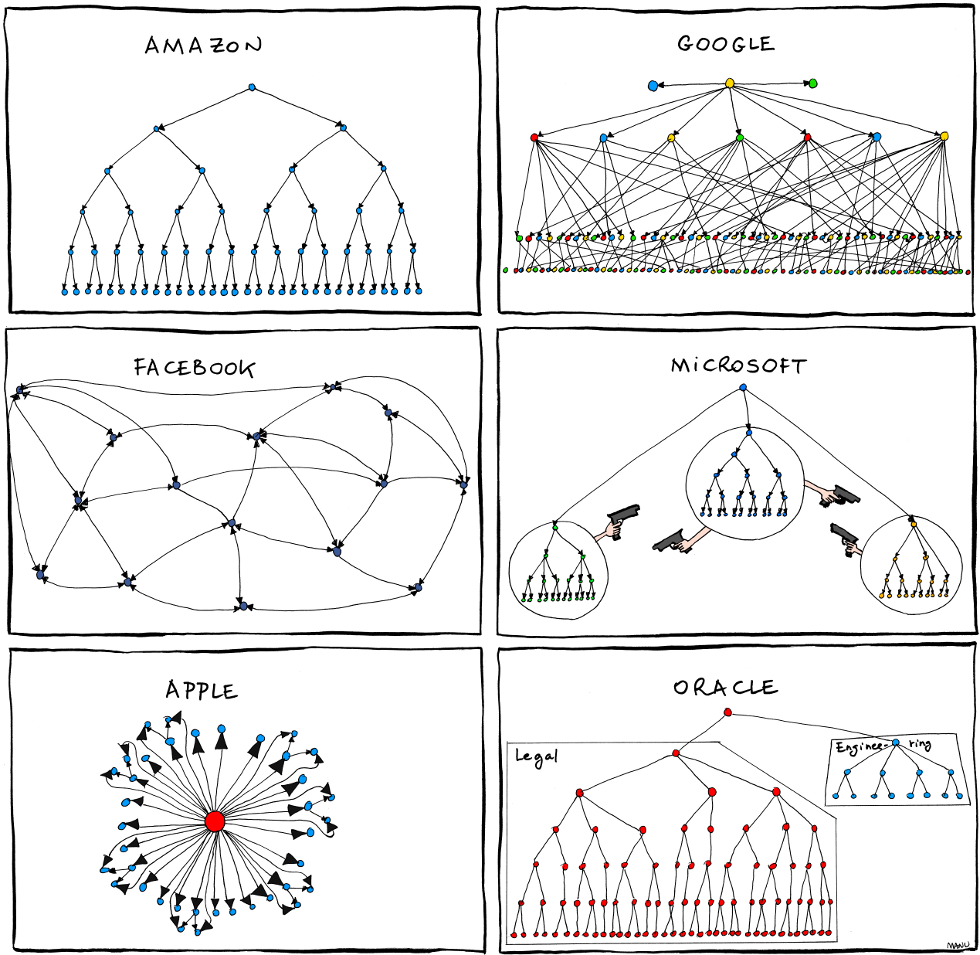
We call it "shipping the org chart." Your fundamental error is assuming that there is any one person -- or even center of authority -- in charge of brand communication.
I like that phrase. I call it 'destroying credibility.'
I get that there are a lot of different groups at Google and they all have their own vision of their own part of the universe, and its super empowering to tell every product manager "Hey, if you can get it market ready you can ship it!" The part that I don't get is that people working for Google aren't clueless. I know a lot of smart people that work there still. So why tolerate a company behavior that is so harmful to their consumer image? Rebranding is treated like a dot dot release it seems. Sure you can get away from a stigma maybe for a bad choice but rebranding on a whim? This stuff has to go through legal right? Trademarks and all that. Who decided to make Pixel a phone? And to just sort of drop the whole Nexus thing? (here is a funny discussion about the Pixel trademark: http://thetrademarkninja.com/2016/10/03/google-event-tradema...)
What it means is that nobody in any authority at Google understands brands, and that is a big red flag for Google's aspirations in the product space.
> So why tolerate a company behavior that is so harmful to their consumer image?
Because they make more money than God? I mean, okay, some customer somewhere is mad at Google abstractly, but not mad enough to stop paying Google (still use Android/gmail/g-suite/buy chromebooks/use chrome). If a tree falls in the woods and nobody hears it, does it make a sound?
edit: For real, they "tolerate" it because looking ahead into a future where this "harm" to their "customer image" does actual harm to Google is really hard. Maybe it happens, maybe it doesn't, but no one can say how likely or precisely when. So, make hay while the sun shines?
But they don't (make more money than God). Apple has more net income in a quarter than Google has revenue. I've said else where that the really "big" bucks eludes them and part of the problem is, in my opinion of course, that they don't have a sensible product message.
Thats one of Google's biggest problems IMO. There is no "grand vision" just a bunch of teams working on random stuff that sometimes completely competes with each other and they end up killing 1, if not both after a year.
On the contrary, the decentralisation is what I appreciate so much about Google - I feel it's the primary driver for innovative stuff that comes out of Google. It may seem like a mess but then you see - creativity doesn't flows out of grand visions.
PS: perhaps Apple was able to achieve "centralized creativity" only because of Jobs.
That can be also a strength. You just keep on throwing out things without much hesitation and see what sticks. You create confusing set of products and kill stuff all the time, but on the other hand you give markets change to decide.
Compare to for example Apple which seems to think so much they get very little out.
Maybe it is very difficult for large organisation to find the balance between these two. Grand vision requires somebody to manage it and filter what gets out. That can lead to great products getting killed just because they were not invented by the VP Visions.
Then there was an interview in which Google's Hiroshi Lockheimer stated that what would most likely happen is each OS gaining features from each other like how ChromeOS can run android apps and how android is using some of chrome's updating methods. you can read the article:
Its hard to say but it seems the andromeda thing is real. I personally think andromeda is just more ChromeOs features put into android. andromeda might just be android O.
> whomever is responsible for brand communication at Google should be let go.
I assume that's the crux of the problem. Whomever that is is either entirely impotent to impose a coherent vision across google or, probably more likely, that person simply doesn't exist.


As a technologist and someone who spends way more time picking apart computer architectures than is healthy, I think it is great that Google is enabling a 2-in-1 ARM architecture which Microsoft pioneered with Windows Surface. I think Google's approach of making it more phone+ rather than laptop- is likely to be better at setting performance expectations.
That said, whomever is responsible for brand communication at Google should be let go. I have never seen branding so confused by such a large company. Pixel is a high end chromebook, uh no its a phone now, Nexus is a phone, no its a tablet, no its a speaker system? Android is an OS? Phone OS? Just Linux? Free? Not free? Open? Not open? Chrome is a browser? An OS? A type of device? A TV peripheral? A way to talk to TVs?
It stuns me how so astonishingly bad this is. Someone should tell them "Hey this is like Star Trek OK?, a lot of nerds follow you and you really have to get what is canon and what isn't canon straight otherwise you'll lose the entire audience."